
How to create a crypto payment link is one of the easiest ways to start accepting crypto without changing your full checkout. Payment links are ideal for invoices, customer support payments, social selling, or one‑off transactions. They give you a shareable URL that opens a secure pagina di pagamento, making it easy to collect funds in minutes.
This article explains how payment links work, how to use them professionally, and how to keep the customer experience clean and trustworthy.
How to create a crypto payment link that customers trust
A good payment link feels like a professional invoice: it shows the amount, the currency, and a simple way to pay. The customer clicks the link, sees a clear payment screen, and completes the transaction without needing extra instructions. If the pagina di pagamento looks confusing or unbranded, customers hesitate. Branding matters, even for a simple link.
For most businesses, payment links are the fastest route to accept crypto while you plan a deeper integration.
Where payment links are most useful
Payment links are perfect for use cases where a full checkout is unnecessary: custom quotes, manual orders, subscription renewals, or late invoice collection. They also work well in customer support scenarios, when a buyer needs to pay a balance quickly without repeating a full checkout process.
Another advantage is flexibility. You can send a link by email, SMS, or chat. This makes payment links a useful tool for sales teams and account managers.
Make the payment amount clear
Set the amount in fiat and let the system calculate the crypto amount at the moment of payment. This prevents price confusion and keeps your accounting consistent. If you accept multiple coins, make the available options clear and keep the network labels visible.
Use a short payment window so the rate remains accurate. If the payment expires, the link should communicate that clearly and allow the customer to generate a new one.
Operational practices that keep links reliable
Payment links should be tied to internal order records. Even if you are not using a full ecommerce checkout, you should create a simple record in your CRM or order system with the link, the amount, and the customer details. This helps with reconciliation and makes support efficient.
When a payment is completed, your system should receive a status update and mark the order paid. Automated status updates prevent human error and save time.
Customer experience details
Keep the pagina di pagamento short and focused. A QR code, the wallet address, and a clear confirmation status are enough. Provide a brief note about confirmation time and refund policy, but avoid long technical explanations. Customers want to complete the payment quickly and move on.
Send a confirmation email that includes the paid amount and the transaction reference. This increases trust and reduces follow‑up questions.
Security and fraud checks
Payment links are simple, but they still need basic security. Use unique links for each transaction and avoid reusing links across customers. For high‑value invoices, add an additional verification step before delivery. These controls reduce risk without adding friction for routine payments.
Monitor link usage for unusual patterns, such as repeated failed attempts or multiple payments from different wallets. These signals can help you catch issues early.
How payment links can evolve into full checkout
Many businesses start with payment links to validate demand. Once volume grows, they integrate a full crypto checkout. The advantage is that you already understand customer behavior and can design the checkout based on real data. Payment links are not a dead end; they are a fast path to learning.
BlockBee payment links
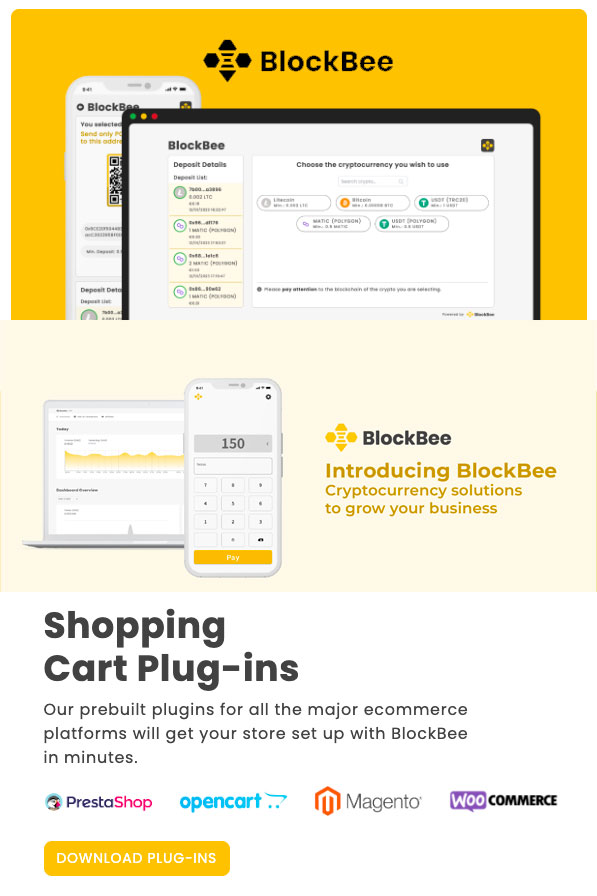
BlockBee provides payment links that are easy to create, branded, and ready for professional use. They include clear payment instructions, real‑time status updates, and integration options for when you move to a full checkout. This makes payment links a practical first step into crypto payments.
Create a crypto payment link with BlockBee and start collecting payments in minutes.
Pricing strategy for links
For one‑off payments, clarity beats complexity. Always show the fiat amount first, then the crypto equivalent. If you offer discounts for crypto, make the discount explicit rather than hidden in the conversion rate. Transparency reduces disputes and keeps customers confident in the process.
For recurring payments, consider generating a new link each cycle so the amount and rate are always up to date. This avoids confusion when prices change or when a customer delays payment.
Using links in marketing and sales
Payment links can shorten the sales cycle. A sales rep can send a link immediately after a call instead of waiting for a full ecommerce flow. For services and custom quotes, that speed can be the difference between a closed deal and a lost one.
Links also work well in social selling. If you operate in communities where crypto is common, a payment link can turn interest into revenue quickly, especially for limited‑time offers.
Common mistakes to avoid
A common mistake is sending links without context. Always include a short message that explains the product or service and the payment amount. Another mistake is leaving a link active for too long; if the rate changes, the customer may be surprised. Use short expiration windows and generate a new link when needed.
Finally, avoid using the same link for multiple customers. Unique links prevent confusion and make reconciliation clean.
These small habits keep links effective.
That is the goal.
Related guides: How to use crypto for online payments: build a flexible, future-ready stack | How to accept cryptocurrency payments: use stablecoins to control price volatility | How to integrate bitcoin payments on your website: secure setup and UX
FAQ
How to create a crypto payment link without a website?
How to create a crypto payment link without a website is possible by generating a hosted checkout URL you can share.
How to create a crypto payment link for a fixed amount?
How to create a crypto payment link for a fixed amount requires setting the price and asset before sharing.
How to create a crypto payment link for custom amounts?
How to create a crypto payment link for custom amounts allows buyers to enter the payment value at checkout.
How to create a crypto payment link that expires?
How to create a crypto payment link that expires uses a time window so rates do not drift.
How to create a crypto payment link and track payments?
How to create a crypto payment link and track payments requires a reference ID and transaction log.
How to create a crypto payment link for subscriptions?
How to create a crypto payment link for subscriptions uses recurring invoices or scheduled payment requests.
How to create a crypto payment link and handle refunds?
How to create a crypto payment link and handle refunds requires a refund policy tied to the original order.
How to create a crypto payment link securely?
How to create a crypto payment link securely requires protected access to link creation and clear order mapping.
How to create a crypto payment link for mobile buyers?
How to create a crypto payment link for mobile buyers works best with QR codes and short checkout steps.
How to create a crypto payment link first step?
How to create a crypto payment link starts by choosing the asset and setting the payment amount.
Editorial Q&A
Q: For how to create a crypto payment link, what is the quickest low-risk setup path?
A: Start with a hosted flow or plugin, pilot on a subset of traffic, then expand once conversion is stable.
Q: How long does it take to go live with how to create a crypto payment link?
A: Most teams can pilot in days; full rollout depends on QA, support training, and monitoring.
Q: Is how to create a crypto payment link better for cross-border buyers?
A: Often yes, because it avoids card friction and reduces FX-related surprises for global customers.
Q: How should refunds be handled for how to create a crypto payment link?
A: Define whether refunds are in crypto, stablecoins, or fiat and document the exchange-rate policy.
Q: What is the most common mistake when rolling out how to create a crypto payment link?
A: Unclear wallet instructions or missing timers. A short explanation and visible status updates reduce drop-off.
Related merchant guides
Explore by topic
Continue reading
- Payment risk management playbook: combine detection, policy, and escalation for safer growth
- Merchant fraud prevention program: stop abuse patterns without hurting genuine customers
- Payment compliance framework: align controls, audit evidence, and launch speed
- Multi currency payments strategy: reduce conversion friction and raise cross-border acceptance
- Forex payment gateway blueprint: control FX exposure and improve international checkout performance
- Declined transactions recovery plan: reduce payment drop-off and restore lost revenue
- Online payment fraud controls: reduce attack surface while keeping checkout conversion
- Merchant discount rate benchmark: renegotiate MDR with a data-backed pricing model











Join the discussion
Share a real experience or ask a focused question. Short replies are perfect.