

Bubble crypto payments make it possible to add a modern checkout to a no‑code app without rewriting your product. Bubble builders often move fast and experiment with new features, so the payment integration must be simple, reliable, and easy to maintain. The best approach is to use a hosted or embedded checkout that keeps complexity low.
This guide outlines a practical integration path for Bubble apps, focusing on UX, order status, and operational stability.
Bubble crypto payments: choose the simplest flow
In most Bubble apps, the fastest integration is a hosted crypto checkout or a payment link. This avoids heavy front‑end work and reduces the risk of breaking the app. Customers click a button, complete payment on a secure page, then return to your app for confirmation.
If your app requires a tighter UX, an embedded widget can work, but keep it lightweight to avoid slowing page performance.
Keep the checkout experience clean
Bubble users expect a smooth experience. Show a clear “Pay with crypto” option, then display the amount, the network, and the payment window. After payment, return the user to a confirmation page in your app and update their account status automatically.
A short line of copy explaining confirmation timing is often enough to prevent confusion. Avoid technical jargon, and focus on clarity.
Order status and data flow
Bubble apps are often driven by workflows. The crypto integration should trigger a workflow when payment is detected and confirmed. This can update order status, unlock content, or provision access. If the workflow is manual, support overhead grows quickly.
Store the transaction hash and fiat value in your Bubble database. This gives you a clean audit trail and helps with support requests.
Security and trust
Even in a no‑code environment, security matters. Use a payment provider that handles address generation and payment detection. This reduces the risk of mistakes and keeps your app focused on its core value. For high‑value orders, add a manual review step or additional verification.
Keep wallet access limited and document who can manage settlement settings.
Pricing strategy
Keep prices in fiat and calculate the crypto amount at checkout. This keeps your pricing consistent and avoids volatility issues. Stablecoins are a good addition for customers who want predictable value.
Offer a focused set of crypto options to keep the interface clean and the support load low.
BlockBee and Bubble‑friendly checkout
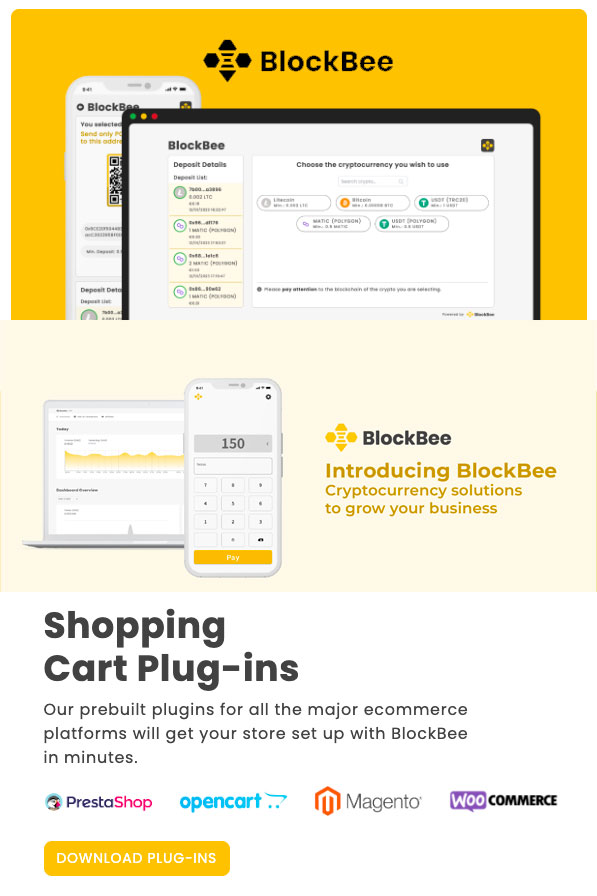
BlockBee provides a crypto payment flow that can be integrated into Bubble apps with minimal friction. It offers hosted checkout options, real‑time status updates, and clean transaction records that can be stored in your app’s database.
Explore Bubble‑friendly crypto payments with BlockBee.
Launch checklist
- Decide on hosted checkout versus embedded widget.
- Keep pricing in fiat and calculate crypto at payment time.
- Trigger Bubble workflows on payment confirmation.
- Store transaction hashes and fiat values.
- Write a short FAQ about confirmations and refunds.
Scale with data
After launch, track conversion and drop‑off for crypto payments. If conversion is low, simplify the payment instructions or reduce the number of crypto options. If conversion is strong, consider expanding to additional coins or adding payment links for off‑site sales.
Small UX improvements usually produce the biggest gains in no‑code environments.
With a simple integration and clear workflows, Bubble crypto payments can deliver a modern checkout without slowing your product roadmap.
Testing and QA before launch
Test the flow on desktop and mobile. Verify that the pagina di pagamento loads quickly, the QR code renders correctly, and the confirmation status updates. Then test your Bubble workflow: confirm that a paid order updates the user’s account, sends a confirmation email, and unlocks the correct content.
Also test edge cases such as late payments or incorrect amounts. Define how your app responds and keep the messaging clear to reduce support tickets.
Use cases beyond checkout
Bubble apps often serve creators, communities, or SaaS products. Crypto payments can work for one‑off purchases, subscriptions, or in‑app upgrades. Payment links are also useful for custom invoices or support‑driven payments without a full checkout flow.
When you map these use cases early, you can design the integration to support them without future rework.
International reach and conversion
Crypto payments can improve conversion for international users who face card declines or high fees. If your Bubble app has a global audience, consider promoting crypto in regions where card acceptance is weaker. The data often shows higher adoption in cross‑border segments.
This makes crypto a growth lever rather than a novelty feature.
Support playbooks and customer messaging
Provide a short help article that explains confirmation timing and refund policy. For support, create a standard response template that includes the transaction reference and order status. This keeps responses consistent and fast.
Clear messaging reduces confusion and protects trust in your app.
Performance and reliability
No‑code apps still need fast pages. Keep the payment widget lightweight and avoid loading heavy scripts on every page. Load the crypto checkout only when the user selects it. This protects overall performance and keeps conversion healthy.
When performance is stable, users perceive the payment flow as trustworthy, which improves completion rates.
Once the integration is stable, you can promote crypto as a premium option for power users and international buyers.
This keeps the feature aligned with growth rather than experimentation.
It is a practical way to modernize payments without slowing your roadmap.
That balance is exactly what Bubble teams want.
It keeps both UX and operations under control.
Related guides: Hosted crypto checkout page: launch payments without changing your site | Crypto payments API integration: build a custom checkout | Odoo crypto payments: integrate a crypto checkout in your ERP store
FAQ
How do you add Bubble crypto payments without code?
Bubble crypto payments can be added by embedding a checkout component and connecting payment events to your workflows.
What is the simplest checkout for Bubble crypto payments?
The simplest checkout for Bubble crypto payments is a hosted page or widget that returns a payment status.
How do webhooks fit Bubble crypto payments?
Webhooks fit Bubble crypto payments by updating your database when a payment is confirmed.
How do you map orders to Bubble crypto payments?
Bubble crypto payments should store order IDs with the transaction reference to keep records linked.
How do you test Bubble crypto payments?
Bubble crypto payments should be tested with a test network or sandbox to validate order updates.
Can Bubble crypto payments support subscriptions?
Bubble crypto payments can support subscriptions by sending recurring invoices and tracking paid status.
What security steps are needed for Bubble crypto payments?
Bubble crypto payments need secure API key storage, role limits, and verification of webhook signatures.
How do refunds work in Bubble crypto payments?
Refunds in Bubble crypto payments should follow your refund policy and be logged with each order.
Do Bubble crypto payments affect conversion?
Bubble crypto payments can improve conversion when the checkout is simple, fast, and mobile friendly.
What is the first step for Bubble crypto payments?
The first step for Bubble crypto payments is choosing a checkout flow and defining confirmation rules.
Editorial Q&A
Q: How do we keep checkout simple with bubble crypto payments?
A: Limit the coin list and use a single, clear call-to-action with short guidance text.
Q: Does bubble crypto payments require changes to accounting?
A: Yes. Record the crypto amount and the fiat value at the time of sale to reconcile orders and taxes.
Q: What is the most common mistake when rolling out bubble crypto payments?
A: Unclear wallet instructions or missing timers. A short explanation and visible status updates reduce drop-off.
Q: Is bubble crypto payments better for cross-border buyers?
A: Often yes, because it avoids card friction and reduces FX-related surprises for global customers.
Q: How should refunds be handled for bubble crypto payments?
A: Define whether refunds are in crypto, stablecoins, or fiat and document the exchange-rate policy.












Join the discussion
Share a real experience or ask a focused question. Short replies are perfect.