

How to accept crypto payments online is ultimately about reaching buyers who want to pay instantly, any time of day, from any location. Online businesses already operate 24/7, but traditional payment rails can introduce delays, declines, and friction—especially across borders. Crypto adds a new way for customers to complete purchases without waiting for banking hours or card approvals.
The best implementations focus on conversion. If crypto makes the checkout feel slower or more complicated, it won’t help. The goal is to add an always‑on payment option that feels as smooth as any other.
How to accept crypto payments online without slowing checkout
Start by positioning crypto as an optional payment method in your existing flow. Keep the primary CTA and the familiar payment options in place. Customers who want to pay with crypto will choose it; everyone else will continue with their usual method.
The payment experience should be fast and obvious: show the amount, the wallet address or QR code, and the countdown timer. When the transaction is detected, send the customer back to a confirmation page and trigger the order status update automatically.
The 24/7 advantage and why it matters
Crypto payments do not rely on banking hours. That makes them ideal for online businesses with global audiences. Customers can pay at night, on weekends, or from regions where card acceptance is limited. This is especially valuable for digital products, SaaS, and international subscriptions, where waiting for bank confirmations can add friction.
Always‑on payments can also reduce cart abandonment when a card fails. A customer who can switch to crypto at checkout is more likely to complete the purchase than if they have to try again later.
Design a frictionless payment screen
Most of the conversion lift comes from a clean, predictable payment screen. Keep the instructions short. Show a QR code and a copyable address. Make the network label visible and avoid technical jargon. The customer should understand how to complete payment within a few seconds.
It is also useful to show a short status indicator: “waiting for payment,” “payment detected,” and “confirmed.” This reduces anxiety and prevents customers from closing the page too early.
Use stablecoins for price consistency
Crypto customers are not all the same. Some prefer Bitcoin, others prefer stablecoins because they track fiat value. If you keep your store pricing in USD or EUR, stablecoins make the total feel familiar and predictable. That reduces hesitation at checkout and can improve conversion.
A common pattern is to offer Bitcoin plus one stablecoin and let the customer choose. You do not need to list every coin; a focused mix is easier to support and easier to explain.
Customer support and refunds
Support teams need a clear playbook. When a payment is pending, the response should explain that confirmation is required before fulfillment. When the payment is confirmed, the response should reference the transaction hash for clarity. This helps resolve most questions quickly.
Refunds should be defined in your policy. Decide whether you refund in crypto or fiat and how you calculate the refund amount. Publish this in a short FAQ so customers know what to expect.
Analytics that show real impact
Track conversion for crypto separately from card payments. Monitor checkout abandonment on the crypto flow and watch for drop‑off at the payment step. If the drop‑off is high, the instructions are too complex or the payment window is too short.
Also watch geographic performance. Crypto can perform exceptionally well in regions where card payments are unreliable. Those insights can guide where you promote the option more aggressively.
Launch checklist for online businesses
- Keep crypto as an optional method in the existing checkout.
- Show clear payment instructions, network labels, and a timer.
- Enable order status updates via webhooks.
- Define and publish refund rules.
- Track conversion and abandonment specifically for crypto.
- Promote crypto in high‑friction international regions.
BlockBee for always‑on checkout
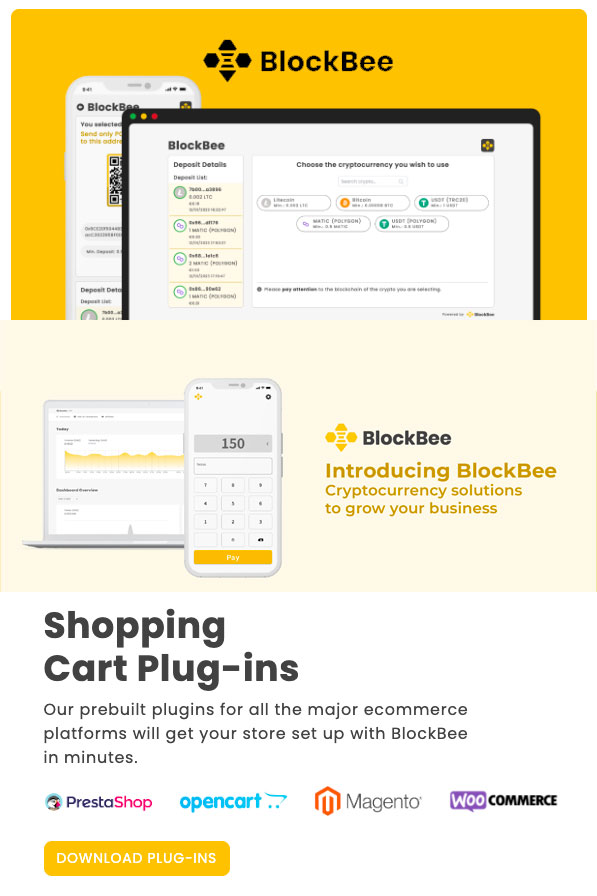
BlockBee helps online businesses add crypto payments without disrupting conversion. It provides a payment flow that stays fast, clear, and compatible with your existing checkout, while giving you real‑time status updates and simple order management.
See how to add an always‑on crypto payment option at BlockBee.
Messaging that drives adoption
Simply enabling crypto is not enough; customers need to notice it. Add a small badge near your checkout, include a line in your payment FAQ, and mention crypto in your order confirmation email. Keep the message practical rather than hype‑driven: “Pay with crypto for a fast, global checkout.” This positions the option as a convenience, which is more credible than marketing it as a novelty.
Be careful not to overpromise. Avoid statements about price appreciation or investment. Your focus should be on payments, speed, and convenience. This keeps the message compliant and trustworthy.
Risk controls that protect fulfillment
Even with fast settlement, you may want to delay fulfillment until a payment is confirmed. This is especially true for high‑value orders or instant digital delivery. Establish a threshold for manual review and set automated rules accordingly. Most businesses find that a light‑touch review for large orders is enough to prevent the few cases that create most losses.
Keep a simple incident log for crypto‑related support requests. Over time, it becomes a blueprint for improving the flow and reducing support load.
With clear messaging and simple controls, crypto becomes a reliable part of your online payment mix.
That reliability is what drives long‑term adoption.
Related guides: How to use crypto for online payments: build a flexible, future-ready stack | How to create a crypto payment link: sell anywhere with a shareable checkout | How to accept cryptocurrency payments: use stablecoins to control price volatility
FAQ
How to accept crypto payments online with a simple flow?
How to accept crypto payments online with a simple flow often uses hosted checkouts or payment links.
How to accept crypto payments online and serve global buyers?
How to accept crypto payments online for global buyers requires clear pricing, supported assets, and localized instructions.
How to accept crypto payments online and keep settlement fast?
How to accept crypto payments online with fast settlement depends on confirmation rules and network choice.
How to accept crypto payments online and protect against fraud?
How to accept crypto payments online and protect against fraud uses confirmation thresholds and order screening.
How to accept crypto payments online and handle refunds?
How to accept crypto payments online requires a refund policy that defines asset type, timing, and rates.
How to accept crypto payments online without code?
How to accept crypto payments online without code is possible through payment links or hosted pages.
How to accept crypto payments online on mobile?
How to accept crypto payments online on mobile works best with QR codes and minimal checkout steps.
How to accept crypto payments online and reduce volatility exposure?
How to accept crypto payments online with less volatility uses stablecoin settlement options.
How to accept crypto payments online and reconcile orders?
How to accept crypto payments online and reconcile orders requires mapping order IDs to transaction IDs.
How to accept crypto payments online first step?
How to accept crypto payments online starts by selecting the checkout method and supported assets.
Editorial Q&A
Q: How should refunds be handled for how to accept crypto payments online?
A: Define whether refunds are in crypto, stablecoins, or fiat and document the exchange-rate policy.
Q: How do we keep checkout simple with how to accept crypto payments online?
A: Limit the coin list and use a single, clear call-to-action with short guidance text.
Q: For how to accept crypto payments online, what is the quickest low-risk setup path?
A: Start with a hosted flow or plugin, pilot on a subset of traffic, then expand once conversion is stable.
Q: How long does it take to go live with how to accept crypto payments online?
A: Most teams can pilot in days; full rollout depends on QA, support training, and monitoring.
Q: What KPIs should we track after enabling how to accept crypto payments online?
A: Track crypto checkout conversion, average order value, time-to-confirmation, refund rate, and support tickets.
Related merchant guides
Explore by topic
Continue reading
- Payment risk management playbook: combine detection, policy, and escalation for safer growth
- Merchant fraud prevention program: stop abuse patterns without hurting genuine customers
- Payment compliance framework: align controls, audit evidence, and launch speed
- Multi currency payments strategy: reduce conversion friction and raise cross-border acceptance
- Forex payment gateway blueprint: control FX exposure and improve international checkout performance
- Declined transactions recovery plan: reduce payment drop-off and restore lost revenue
- Online payment fraud controls: reduce attack surface while keeping checkout conversion
- Merchant discount rate benchmark: renegotiate MDR with a data-backed pricing model











Join the discussion
Share a real experience or ask a focused question. Short replies are perfect.