Stripe fees is not just a content angle. It is an operational choice that affects friction, confirmation speed, settlement visibility, and the amount of manual review a team has to perform every day. When the setup is right, customers finish payment with less hesitation and operations reconcile faster.
That is why stripe fees vs paypal fees vs crypto payment fees has to be judged on real workflow fit. The team needs to see how the payment request is created, how success is verified, and how funds reach treasury or finance. If Stripe fees vs PayPal fees vs crypto payment fees changes one of those steps, it changes conversion, support load, and margin.
Stripe fees: key differences merchants should compare
The first test for Stripe fees is whether it fits the real payment journey. Merchants need to check wallet coverage, price-lock timing, status visibility, and whether the buyer immediately understands the next step. When those pieces are unclear, friction moves from checkout into support and operations.
In practice the best decision starts with the actual use case behind stripe fees vs paypal fees vs crypto payment fees. A flow built for fast deposits, recurring payments, or cross-border orders needs reliable confirmation, clear settlement rules, and a fallback when the transfer arrives late or with the wrong amount.
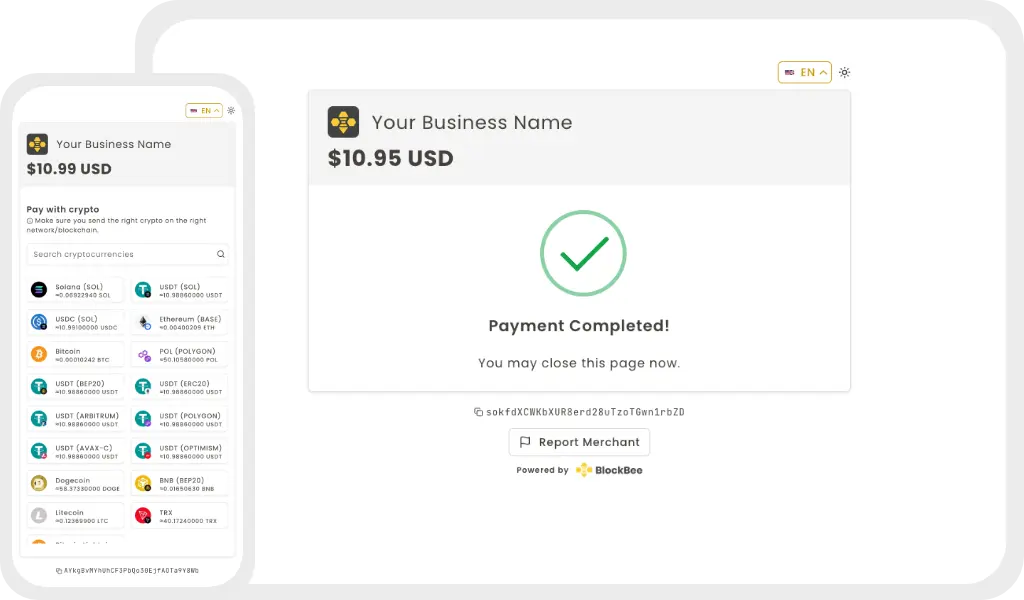
Costs, risk and operational trade-offs
Implementation should be measured by business impact, not by setup speed alone. A strong flow cuts manual steps, keeps reconciliation readable, and lets finance understand fees, conversion rules, and fund availability without chasing multiple dashboards.
At the same time the launch has to stay lean. Plugins, APIs, and settlement rules should reduce checkout friction, avoid duplicate review, and leave the team with usable metrics on payment success, stalled orders, and gaps between expected and received amounts.
- define the primary use case for Stripe fees before selecting the provider
- test confirmation, settlement, and amount-mismatch handling in a controlled flow
- align finance, support, and compliance on review and refund rules
- track success rate, stalled orders, and average fund availability time
- publish short and clear instructions inside checkout
Finally, the team should monitor payment success, stalled orders, settlement timing, and support load so every change can be tied back to revenue.

Which setup fits which merchant profile
Risk and compliance should not be treated as separate from conversion. When controls arrive too late, the merchant absorbs more operational risk; when they arrive too early or too aggressively, buyers abandon. The right balance is a control layer that protects funds without breaking payment intent.
That is why the operating model needs simple rules for limits, escalation, refunds, and manual review. Once those rules are clear, this channel stops being a vague experiment and becomes a controllable payment channel.
The next step is to run the project as a channel with metrics, not as a one-off experiment. If the team needs a practical benchmark for wallet support, checkout control, and settlement clarity, BlockBee is a useful technical reference point.
Related guides: Crypto payments for ecommerce | How to accept crypto payments for business | How to add crypto payments to website reduce processing costs without breaking checkout
Before the FAQ, the team should confirm that monitoring, support, and treasury rules are ready for volume growth.

FAQ
How should merchants evaluate Stripe fees?
Stripe fees should be judged on wallet support, confirmation timing, settlement rules, and buyer clarity, not on feature count alone.
What are the main implementation risks of Stripe fees?
The main risks sit in delayed review, weak reconciliation, amount mismatches, and refund or limit policies that are not operationally clear.
How does Stripe fees affect checkout, settlement or compliance?
this channel changes checkout, treasury timing, and compliance because it changes how payment status and incoming funds are verified.
What should a merchant test before going live with this integration?
Before go-live, the team should test successful orders, stalled orders, wrong amounts, webhook handling, reporting, and support escalation.
How does this integration change reconciliation and treasury timing?
Reconciliation and treasury improve when reporting is clear, conversion rules are explicit, and expected funds can be matched to received funds quickly.
When is a hosted flow better than a direct integration for this integration?
A hosted flow is usually faster to launch, while a direct integration is stronger when the merchant needs full UX, data, and logic control.
Editorial Q&A
Q: What proves that Stripe fees is improving the funnel?
A: Fewer stalled orders, fewer support tickets, and faster reconciliation are the clearest signals.
Q: When should a merchant simplify this setup?
A: When buyers see too many options or the team cannot explain the settlement and confirmation rules clearly.
Q: Who should own the operational risk of this setup?
A: Compliance defines the boundary, while product and operations decide where controls should sit without breaking flow.
Q: What is the most common mistake in this setup projects?
A: Selecting the provider on feature count alone instead of on how the team will manage exceptions, reporting, and support.
Q: When is it time to scale this setup after a pilot?
A: Only after payment success, fund availability, and support load stay healthy at higher volume.