

Crypto invoice payments for B2B let businesses accept larger transactions without card fees and with faster settlement. For service providers, agencies, and SaaS vendors, crypto invoices can shorten payment cycles and reduce costly processing charges. The key is to build a workflow that fits existing billing systems.
This guide shows how to add crypto invoice payments to a B2B stack while keeping compliance, reconciliation, and customer support under control.
Crypto invoice payments for B2B start with billing structure
B2B payments are often tied to milestones, net terms, and multi‑party approvals. A crypto invoice should respect those terms, with a clear due date, a locked fiat amount, and a crypto equivalent calculated at payment time.
Most B2B teams prefer to issue invoices in fiat and let the payment link handle crypto conversion. This keeps contracts and accounting stable while still giving the buyer a crypto option.
Payment links and automated reminders
Crypto invoice payments work best when the payment action is simple. A single payment link that opens a secure crypto checkout reduces confusion. Include it in the invoice PDF and in the email reminder sequence.
Automated reminders help reduce late payments. The reminder should repeat the fiat total, show the crypto option, and include the same payment link. Consistency improves completion rates.
Settlement and treasury policy
B2B transactions can be large, so settlement strategy matters. Many merchants prefer to settle to stablecoins or fiat quickly to avoid volatility. If you choose to hold a portion in crypto, document how much and for how long.
A clear treasury policy protects margins and makes finance approvals easier. It also helps sales teams explain the option to clients confidently.
Reconciliation and audit readiness
Finance teams need a clean record for each invoice: crypto amount, fiat value at time of sale, and transaction ID. This data should match the invoice number and customer record.
Automated exports reduce manual work. A clean reconciliation flow is what makes crypto invoice payments viable at scale.
Customer experience in B2B payments
Many B2B buyers are not crypto‑native. The checkout must explain the steps clearly and provide support options. A short FAQ near the payment link can prevent confusion and delays.
For enterprise clients, offer a short onboarding guide that explains how to pay, how confirmations work, and how refunds are handled if needed.
BlockBee for B2B crypto invoicing
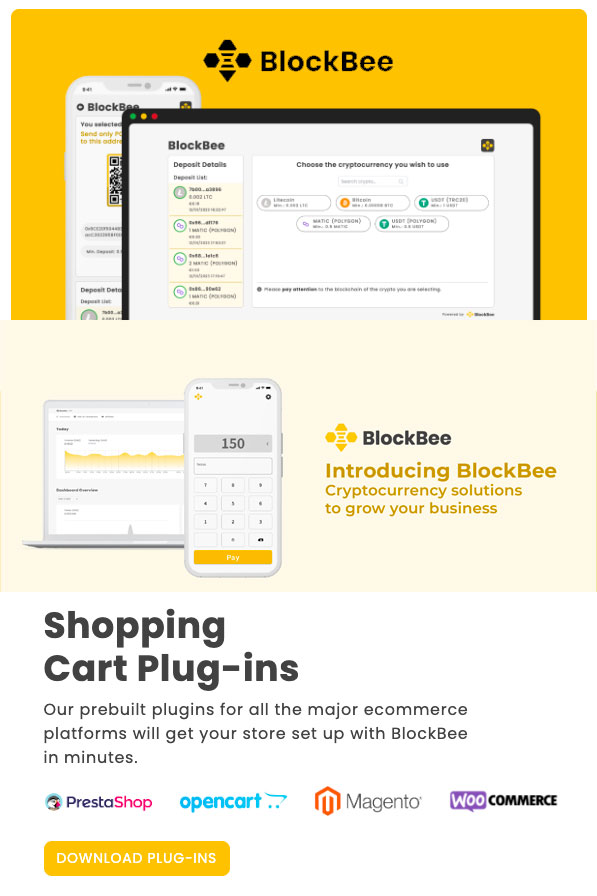
BlockBee provides payment links and checkout tools that fit B2B invoicing workflows. It supports multiple coins and stablecoins, lets you define settlement preferences, and keeps records clean for reconciliation.
If you want to add crypto invoice payments without disrupting billing operations, BlockBee is a merchant‑friendly option that scales with B2B volume.
Related guides: Hosted crypto checkout page: launch payments without changing your site | Crypto payments API integration: build a custom checkout | Bubble crypto payments: add a no-code crypto checkout
FAQ
What are crypto invoice payments for B2B?
Crypto invoice payments for B2B let businesses pay invoices with crypto or stablecoins while merchants settle in fiat or stablecoins.
Why use crypto for B2B invoices?
It can reduce card fees, speed settlement, and simplify cross\u2011border payments.
Do I need to invoice in crypto?
No. You can invoice in fiat and calculate the crypto amount at payment time.
How do payment links help?
Payment links make it easy for clients to pay without manual wallet entry or extra steps.
How should I handle large invoice amounts?
Use clear limits, settlement policies, and a review process for unusually large payments.
How do I reconcile crypto invoices?
Match the invoice number to the transaction hash and fiat value at the time of payment.
Are stablecoins better for B2B?
Often yes, because they reduce volatility and align with fixed invoice totals.
What about refunds or overpayments?
Define a policy for refunds and credits, including how rates are calculated.
How do I explain crypto invoices to clients?
Provide a simple guide that explains the steps, timing, and confirmation process.
Can crypto invoicing work with existing billing software?
Yes, if the payment link and reconciliation data can be attached to your invoice record.
Editorial Q&A
Q: How do we handle overpayments in crypto invoice payments for B2B?
A: Document a credit or refund policy and apply it consistently.
Q: How do we handle partial payments in crypto invoice payments for B2B?
A: Track partials against the invoice balance and automate reminders.
Q: How do we confirm payment for crypto invoice payments for B2B?
A: Issue a receipt with the transaction hash and fiat value at payment.
Q: What payment terms work best for crypto invoice payments for B2B?
A: Net terms with a clear due date and a single payment link.
Q: For crypto invoice payments for B2B, should invoices be in fiat?
A: Yes. Keep contracts in fiat and convert to crypto at payment time.












Join the discussion
Share a real experience or ask a focused question. Short replies are perfect.