

Crypto payments for ecommerce are moving from a niche option to a practical checkout choice for stores that sell globally. The model is simple: a shopper pays in Bitcoin or a stablecoin, the gateway locks the exchange rate for a short window, and you settle in fiat or crypto depending on your preference. That adds a new payment rail without disrupting your existing checkout.
What matters most is that the experience stays familiar. If customers understand the steps and the payment confirms quickly, conversion can improve and support tickets stay low.
How crypto checkout works in practice
At checkout, the customer selects a crypto option and receives a real-time invoice with a payment address or QR code. The price is locked for a limited time, the customer sends funds from a wallet, and the gateway confirms the transaction on-chain. Once confirmed, the order status updates in your store just like any other payment method.
The smoother the wallet experience, the better the results. Wide wallet support reduces friction for international buyers and avoids abandonment caused by incompatible wallets.
Crypto payments for ecommerce: settlement options that fit your cash flow
Merchants typically choose between fiat settlement and crypto settlement. Fiat settlement keeps accounting simple and removes volatility from your balance sheet, while crypto settlement can be useful for treasury exposure or paying vendors in crypto. Many merchants start with fiat and later add a crypto allocation once the flow is stable.
Fees, chargebacks, and operational impact
Blockchain payments are irreversible once confirmed, which removes the traditional chargeback process. This can reduce dispute costs and simplify operations, especially for cross-border orders and digital goods. Processing fees are often competitive with card rails, and the savings are more noticeable on larger baskets.
Integration paths: plugin, hosted checkout, or API
Most stores can launch quickly using a plugin or hosted checkout. Plugins are ideal for common platforms and can be set up without custom development. APIs offer full control for custom carts or enterprise teams but require a development cycle. The key is to keep the customer flow consistent with your existing checkout.
Compliance, reporting, and reconciliation
Crypto transactions still need clean bookkeeping. Maintain invoice records, transaction hashes, and settlement reports so finance can reconcile orders and revenue. A clear refund policy matters as well, especially for crypto refunds that may differ from card workflows.
Customer experience and trust signals
Clarity at checkout improves completion rates. Show supported coins, display the payment timer, and confirm the order immediately after payment. A short FAQ near the payment option helps first-time buyers feel confident.
Launch checklist for merchants
- Define which coins and stablecoins you will accept.
- Choose settlement in fiat, crypto, or a split model.
- Install the gateway plugin or integrate the API in staging.
- Run test transactions to confirm order status flows.
- Update FAQs and checkout copy to explain the crypto option.
- Monitor conversion rate, payment success rate, and support tickets.
Common mistakes to avoid
Overly long instructions, limited wallet support, and unclear timing are common sources of checkout friction. Keep the flow short, avoid jargon, and make the payment window explicit. If you can’t support many coins at launch, start with a focused list that matches your audience.
A practical path forward
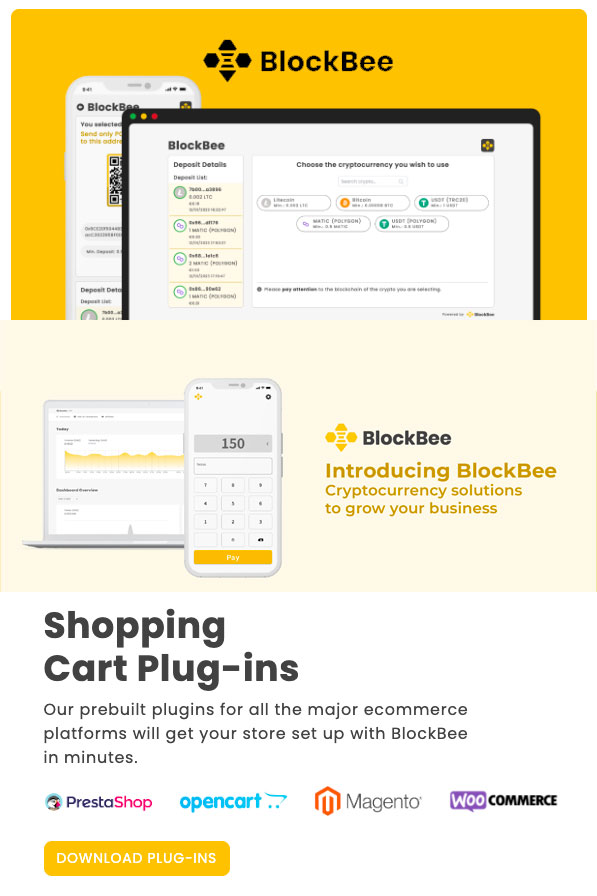
If you want a managed solution with plugins and APIs built for merchants, you can start with BlockBee and expand your setup as demand grows. It keeps the checkout familiar while adding crypto as a native option.
Quick FAQ
You do not need to hold crypto if you choose fiat settlement. The gateway can convert the payment and deposit local currency to your bank account, which keeps accounting simple.
Crypto payments can be offered alongside cards without changing your existing checkout. Add one new payment option, measure adoption, and iterate based on results.
Choosing coins and stablecoins
Start with a small set that matches real customer demand. Bitcoin covers the largest brand recognition, while stablecoins are useful for price-sensitive buyers who want predictable amounts. If you sell internationally, offer at least one stablecoin to reduce price anxiety at checkout.
Pricing, time windows, and underpayments
Every crypto invoice should have a clear time window so customers understand when the price is locked. If the payment arrives late or short, decide in advance how you will handle it. Some gateways automate underpayment handling and let you accept small differences, which reduces support friction.
Refunds and customer support
Define a refund policy that explains whether refunds are issued in fiat or crypto and how the amount is calculated. Publish it clearly so customers know what to expect. This reduces disputes and keeps your support team aligned on a single process.
Security and fraud considerations
Blockchain payments reduce card fraud but bring their own risks, such as customers sending funds to the wrong address or falling for phishing. A clean, well-branded checkout page and clear payment instructions help prevent mistakes. Internally, limit access to API keys and monitor webhook logs for anomalies.
Measuring performance and iterating
Track adoption rate, payment success rate, average order value, and the countries where crypto is most used. These metrics show whether the payment option is helping revenue or simply adding complexity. Use the data to decide when to add coins, refine the checkout UI, or expand to new markets.
Localization and pricing display
International buyers convert more often when prices are shown in their local currency. Even if the payment is crypto, displaying the fiat equivalent builds trust. Keep the pricing consistent across product pages, cart, and checkout so customers never see conflicting amounts.
Related guides: How to use crypto for online payments: build a flexible, future-ready stack | How to create a crypto payment link: sell anywhere with a shareable checkout | How to accept cryptocurrency payments: use stablecoins to control price volatility | How to add crypto payments to website: reduce processing costs without breaking checkout | How to accept crypto payments online: add a 24/7 payment method that converts | How to accept bitcoin payments for business: leverage brand trust and buyer intent
FAQ
How do crypto payments for ecommerce work at checkout?
Crypto payments for ecommerce work by generating a payment request per order and confirming the transaction before fulfillment.
How do crypto payments for ecommerce handle price volatility?
Crypto payments for ecommerce handle volatility by pricing in fiat and settling in stablecoins or auto converting.
How do crypto payments for ecommerce reduce chargebacks?
Crypto payments for ecommerce reduce chargebacks because transactions are final after confirmations, but refunds are still merchant controlled.
How do crypto payments for ecommerce improve international sales?
Crypto payments for ecommerce improve international sales by allowing global buyers to pay without card restrictions.
How do crypto payments for ecommerce work with refunds?
Crypto payments for ecommerce require a refund policy that defines timing, asset type, and exchange rate handling.
How do crypto payments for ecommerce affect accounting?
Crypto payments for ecommerce affect accounting by requiring logs of transaction IDs, timestamps, and values at receipt.
How do crypto payments for ecommerce integrate with order status?
Crypto payments for ecommerce integrate with order status using webhooks that update orders after confirmation.
How do crypto payments for ecommerce keep checkout fast?
Crypto payments for ecommerce keep checkout fast with QR codes, clear instructions, and real time status updates.
How do crypto payments for ecommerce control fees?
Crypto payments for ecommerce control fees by choosing efficient networks and settlement rules.
How do crypto payments for ecommerce start?
Crypto payments for ecommerce start with choosing the checkout flow and deciding how you want to settle funds.
Editorial Q&A
Q: In crypto payments for ecommerce, when is a stablecoin the better option?
A: Stablecoins are best for price-stable checkout and predictable accounting.
Q: Does crypto payments for ecommerce affect refund policy?
A: Stablecoin refunds are simpler; Bitcoin refunds need a clear rate policy.
Q: Why keep Bitcoin in crypto payments for ecommerce?
A: Bitcoin attracts crypto-native buyers and can improve trust for that audience.
Q: What is a safe default for crypto payments for ecommerce?
A: A stablecoin default with Bitcoin as an alternative works well for most stores.
Q: How should crypto payments for ecommerce present the choice?
A: Explain stable vs volatile in one line and keep the list short.












Join the discussion
Share a real experience or ask a focused question. Short replies are perfect.