

If your customers are global, it is normal to see payment friction: card declines across borders, higher fees, and delays in settlement. How to accept crypto payments for business is not just a trend question anymore; it is a practical way to serve buyers who already hold digital assets and prefer to pay directly. The goal is not to replace your current checkout, but to add a second lane that expands reach without confusing existing customers.
This guide focuses on a merchant-first approach: preserve the checkout flow you already know, reduce operational risk, and add crypto in a way that supports your revenue goals. You can take the benefits of cryptocurrency payments while keeping stable pricing, simple refunds, and clean bookkeeping.
How to accept crypto payments for business without disrupting checkout
The safest path is to add crypto as an additional payment method, not a replacement. This means your card, wallet, and bank options stay intact while a new “Pay with crypto” option appears at checkout. Most businesses choose a hosted or embedded payment experience, where the customer pays to a unique address or completes a short on-chain checkout flow. That approach keeps your site fast and reduces the need to manage private keys or hot wallets internally.
From a customer perspective, the experience should feel as simple as a normal checkout: choose crypto, see the amount, pay, and return to a confirmation screen. The fewer steps, the higher the conversion rate. If you want repeat business, you can also offer a payment link or invoice for off-site sales and follow-up payments.
Pick a payment flow that fits your operations
There are three common flows. First, a hosted checkout page that your payment processor provides. It is quick to implement and reduces risk because the processor handles the payment session. Second, an embedded checkout widget that keeps the user on your site; this can improve brand consistency but needs more front-end attention. Third, a direct wallet model, where you generate your own addresses; this is flexible but increases operational burden and reconciliation work.
For most merchants, the sweet spot is a processor-managed flow with real-time confirmations and webhook updates. You keep control of the customer experience, while the payment logic is handled by software built for crypto transactions. That keeps your team focused on the product and the customer journey.
Choose what to accept: Bitcoin, stablecoins, or both
Bitcoin is still the most recognized cryptocurrency, and many buyers look for it specifically. Stablecoins, however, are increasingly important because they help keep pricing consistent in fiat terms. A balanced approach is to offer Bitcoin for brand trust and visibility, plus at least one stablecoin option for customers who prefer price stability.
Your pricing model can stay in fiat while the crypto amount is calculated at the moment of payment. This avoids the complexity of price volatility. It also keeps your catalog clean because you do not need to list items in crypto units. The result is a checkout that feels familiar, while the payment method is modern.
Benefits beyond “extra payment options”
Adding crypto can increase your addressable market. International buyers who are underserved by card networks can pay in a way that works for them. You can also see fewer issues with cross-border declines, which often happen when card issuers see unfamiliar merchant activity. For digital products or SaaS, crypto payments are also a natural fit because delivery is instant and chargeback risk is a common pain point.
Another benefit is speed of settlement. Card funds can take days to finalize; crypto transactions can settle much faster, especially when you use a processor that confirms and updates the payment state in real time. Faster settlement can improve cash flow, which matters for fast-moving inventories or marketing-driven businesses.
User experience details that make or break conversion
Crypto buyers care about clarity. Make sure the payment amount, network, and time window are clearly displayed. If you accept multiple networks, show them in a human-readable way so the customer does not accidentally send funds on the wrong chain. Also set expectations about confirmation time and the final confirmation screen that returns them to your site.
Use lightweight visual cues: a short explanation near the payment method, a small “crypto accepted” badge in the footer, and an FAQ with two to three lines about refunds. Do not overwhelm the checkout page. Keep your normal call-to-action intact and make crypto feel like a simple, optional upgrade.
Compliance, taxes, and refunds
Compliance is part of a professional implementation. You should capture the same order details you do for fiat payments and keep transaction hashes for audits. If your processor offers customer identity checks for high-value orders, use them. For taxes and accounting, record the fiat value at the time of the transaction and store that alongside the crypto amount.
Refunds are straightforward when you use a modern processor: you can issue refunds in the original currency or in fiat, depending on your policy. Whatever you choose, be explicit in your terms so customers understand the process. Clear refund rules reduce disputes and protect your brand.
Go-live checklist
- Define which coins and networks you will support.
- Decide on a hosted, embedded, or direct wallet flow.
- Set pricing in fiat and calculate crypto at checkout.
- Test the full loop: payment, confirmation, email, and refund.
- Update FAQ, checkout notes, and customer support scripts.
- Monitor conversion rate and drop-off at the payment step.
Where BlockBee fits
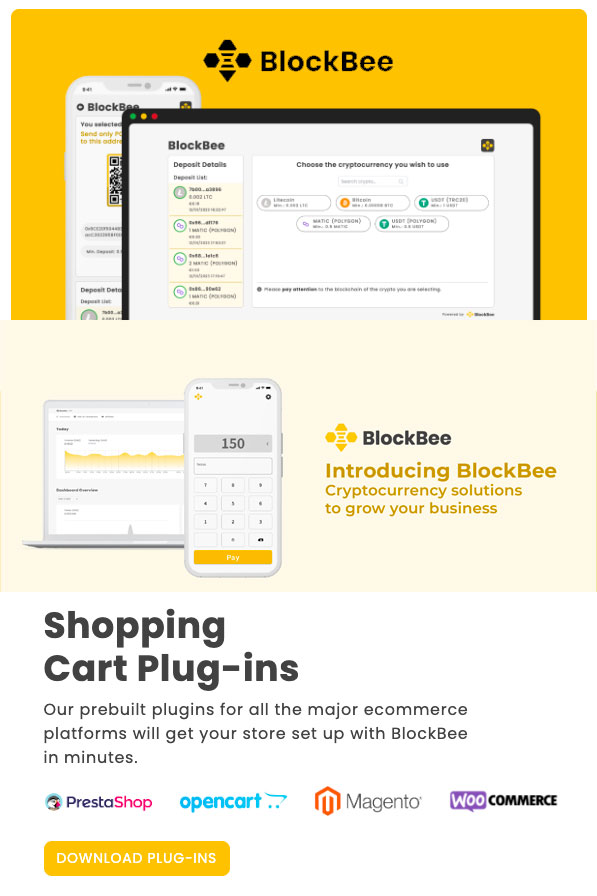
If you want a clean path to launch, BlockBee provides a merchant-ready crypto payment layer that works with common ecommerce stacks and direct payment links. You can add crypto without breaking your checkout, keep your pricing stable, and scale payments as volume grows. Start with one payment option, learn from real customers, then expand to stablecoins and additional networks once the flow is proven.
To see how it works in practice, explore BlockBee and design a payment flow that matches your business goals.
Related guides: How to use crypto for online payments: build a flexible, future-ready stack | How to create a crypto payment link: sell anywhere with a shareable checkout | How to accept cryptocurrency payments: use stablecoins to control price volatility
FAQ
How to accept crypto payments for business without major technical changes?
How to accept crypto payments for business often starts with a hosted checkout or payment link so you can launch without rebuilding your site.
How to accept crypto payments for business and keep pricing stable?
How to accept crypto payments for business with stable pricing depends on showing prices in fiat and settling in stablecoins when needed.
How to accept crypto payments for business and handle refunds?
How to accept crypto payments for business requires a clear refund policy that defines asset type, timing, and exchange rate rules.
How to accept crypto payments for business while reducing volatility risk?
How to accept crypto payments for business with lower volatility risk usually means auto converting a portion of receipts to stablecoins.
How to accept crypto payments for business and reconcile orders?
How to accept crypto payments for business and reconcile orders means linking each payment to an order ID and logging confirmations.
How to accept crypto payments for business and stay compliant?
How to accept crypto payments for business and stay compliant requires mapping jurisdictions, keeping records, and applying risk based checks.
How to accept crypto payments for business and improve checkout UX?
How to accept crypto payments for business and improve UX means offering QR codes, clear instructions, and real time status updates.
How to accept crypto payments for business and manage fees?
How to accept crypto payments for business and manage fees starts with selecting networks and settlement rules that fit your margins.
How to accept crypto payments for business and reduce fraud?
How to accept crypto payments for business and reduce fraud requires confirmation rules and risk checks on high value orders.
How to accept crypto payments for business first step?
How to accept crypto payments for business begins by choosing your checkout flow and deciding how you want to settle funds.
Editorial Q&A
Q: How do we reduce FX friction in how to accept crypto payments for business?
A: Use stablecoins and settle based on a clear treasury policy.
Q: How do we handle taxes for how to accept crypto payments for business across borders?
A: Record the fiat value at sale and align reporting with local rules.
Q: How do we expand how to accept crypto payments for business gradually?
A: Start with proven regions and expand based on conversion data.
Q: For how to accept crypto payments for business, do we need localized messaging?
A: Yes, short localized copy improves trust and reduces confusion.
Q: Which regions benefit most from how to accept crypto payments for business?
A: Markets with card constraints or high FX fees often convert well.












Join the discussion
Share a real experience or ask a focused question. Short replies are perfect.